Kitchen worktop ideas: materials, colours and edges
By Barry, Director, Zebra Kitchens and Interiors
Last updated · 5 min read
Good kitchen worktop ideas start with how you use the kitchen rather than what looks best in a photograph. The worktop is the surface you touch most, so it needs to cope with chopping, hot pans, spills and cleaning, as well as suiting your doors and floor. Getting it right makes a kitchen feel finished, and replacing it can transform a tired room on its own.
We fit worktops as part of new kitchens, renovations and makeovers, with quartz being one of the most popular choices. This guide looks at the main materials, colour combinations, edges and details that make a difference, and how to choose the right option for your household. You can see worktop samples at our showroom at 181 Walsall Road, Great Wyrley.
Kitchen worktop ideas by material
Quartz
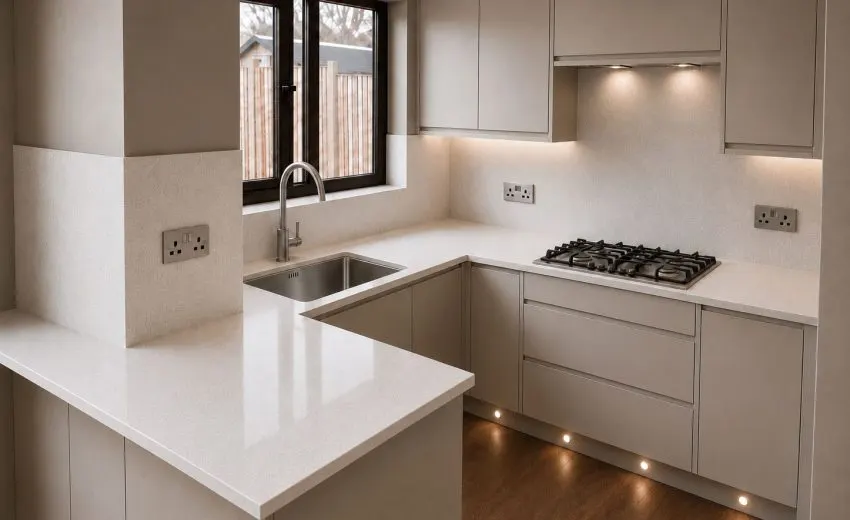
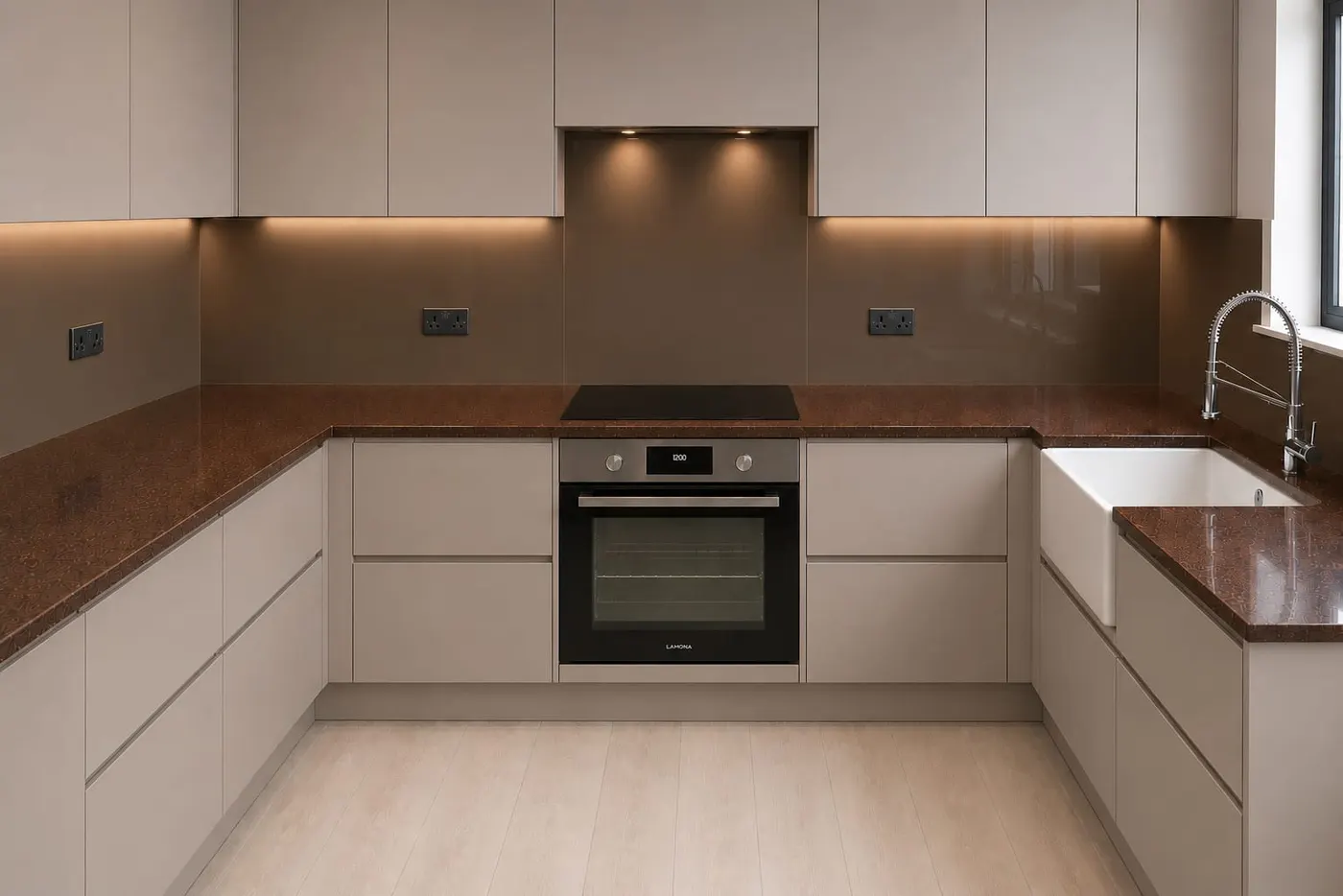
Quartz is hard-wearing, non-porous and low maintenance, which makes it a favourite for busy kitchens. It comes in plain colours, speckles and marble-style veins. It is templated and made for your kitchen, so the fit is precise.
Solid wood
Wood brings warmth and suits shaker, country and traditional kitchens. It needs regular oiling and care around sinks, and it can show marks, though many people like the way it ages.
Laminate
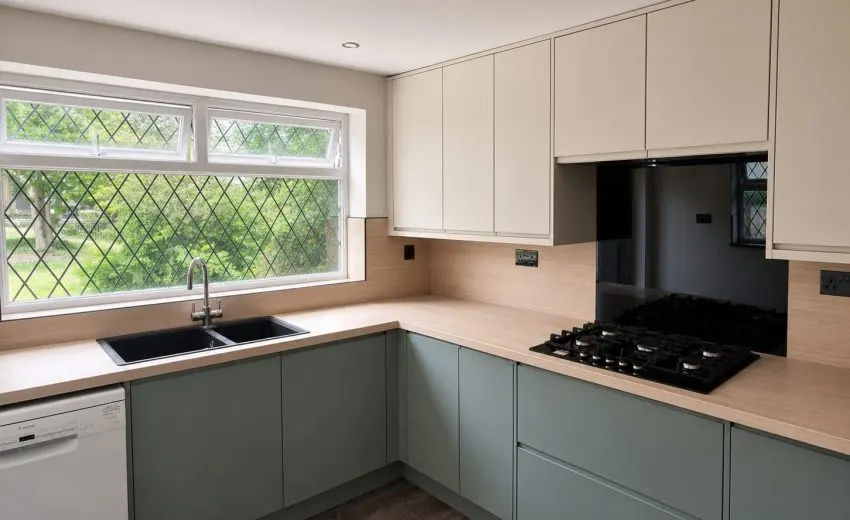
Laminate is an affordable option available in many colours and effects, including stone and wood looks. Modern laminates are much better than they once were, though they are less resistant to heat and deep cuts than quartz.
Colour pairings that work
Some of the combinations we fit most often include:
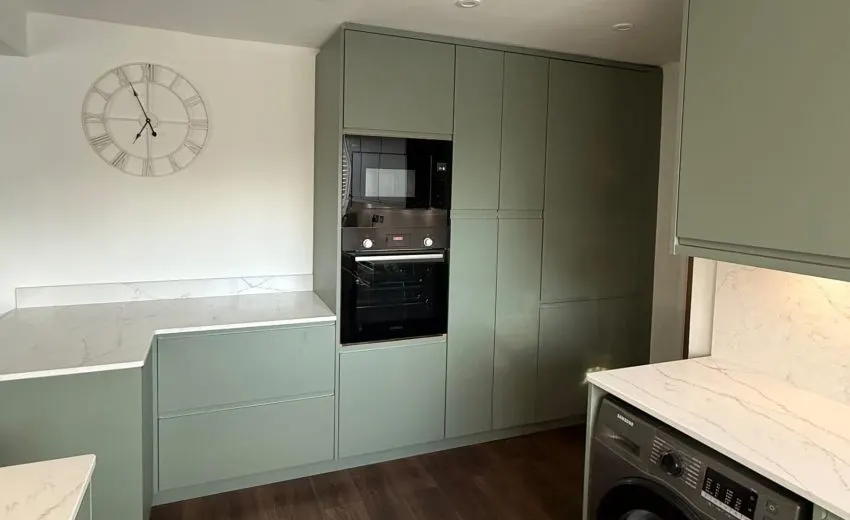
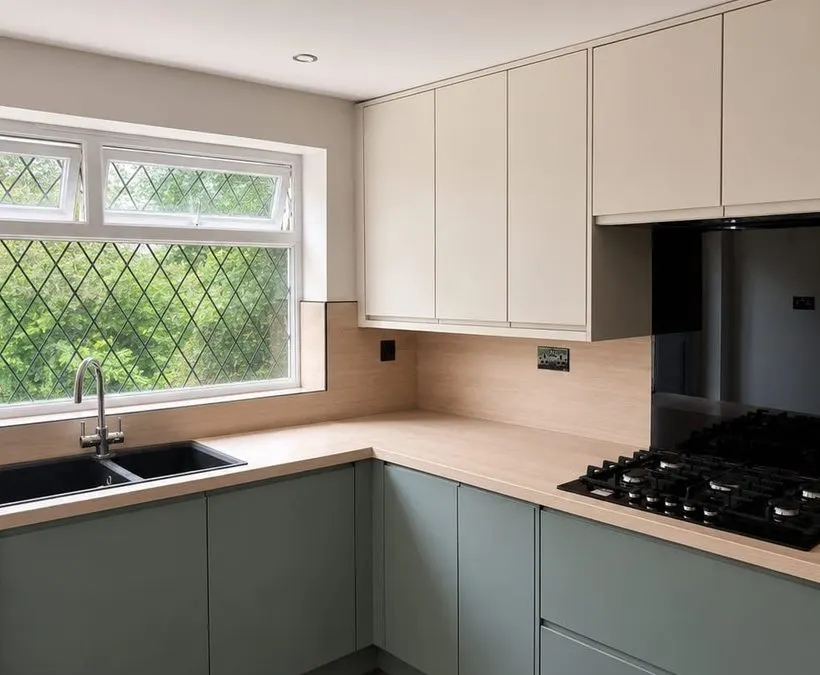
- White veined quartz with sage, reed or deep green doors
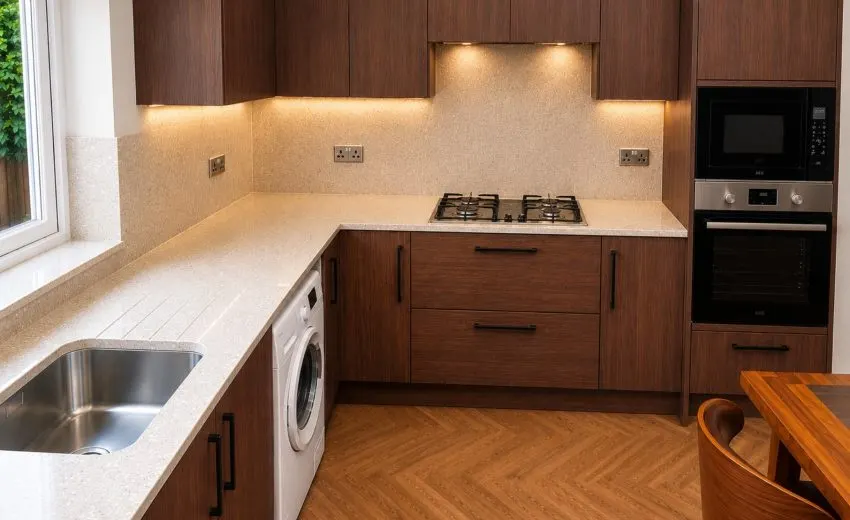
- Cream quartz with dark walnut or wood-effect doors
- White quartz with navy or charcoal cabinets for strong contrast
- Warm white tops in an all-cream or all-white kitchen
- A darker worktop on an island against pale main runs
Contrast tends to make both doors and worktops stand out, while tone-on-tone gives a calmer look. Neither is right or wrong; it depends on the feel you want.
Thickness and edge details
A slim worktop looks modern and light, while a thicker one feels more solid and traditional. Edge profiles range from square and slightly eased to more decorative shapes. Details such as a mitred edge, which makes a top look thicker, or a waterfall end on an island, can become real features.
These details change the cost and the look, so it is worth seeing samples and talking them through at the design stage.
Upstands and splashbacks
A matching upstand along the back of the worktop gives a neat, continuous finish and protects the wall. A full-height splashback behind the hob, in matching quartz or a contrasting glass, makes an easy-clean feature. Tiles remain a popular choice for character and texture.
Think about where sockets and switches fall, as they need to fit neatly within upstands and splashbacks.
Practical features
Small details make a worktop more useful. Undermounted sinks give a clean edge that is easy to wipe into. Drainer grooves cut into quartz save space beside the sink. Boiling water taps, pop-up sockets and integrated hobs all need planning before templating, as cut-outs are made to exact sizes.
Worktops for islands and peninsulas
Islands and peninsulas are often where people choose a feature worktop. A bold vein, a contrasting colour or a waterfall end can make the island the centrepiece of the room. Seating overhangs need suitable support, and the edges on view from all sides should be finished well.
If the main runs are busy with appliances, a clear island top gives valuable preparation space.
Replacing worktops only
If your cabinets are sound and you like the layout, new worktops can refresh the whole kitchen without replacing everything. The cabinets need to be level and strong enough, especially for quartz. Our published guidance is that worktop replacements start from around £2,000, and worktops and doors together from around £4,000, depending on your room, products and work.
How to choose
Narrow your options to a few samples and look at them against your doors and floor in your own light. Think about how hard you are on the worktop day to day and how much maintenance you are happy with. Barry can bring samples on a free home visit, measure the kitchen and include the worktop in a free design and quote, so you can see the whole room together before deciding.
Matching the worktop to how you cook
Keen cooks who roll pastry, knead dough or use heavy pans every day usually value a hard, cool, stain-resistant surface, which is why quartz is so often chosen. Households with young children may prefer a forgiving speckled pattern that hides crumbs and fingerprints between wipes. If you rarely cook and want warmth and character, wood can be a lovely choice, as long as you are happy to oil it and treat it with care around the sink.
It also helps to think about the length of worktop you actually use. Many kitchens have plenty of surface on paper but very little clear space once the kettle, toaster and coffee machine are out. Planning appliance garages, deeper worktops or a clear island can matter as much as the material you choose.
Finally, consider how the worktop will look in five or ten years. Classic whites, creams and soft veins tend to sit well with changing door colours and decoration, so they are a safe base if you think you may update the doors later. A bolder colour can be wonderful, but is best chosen because you love it rather than because it is fashionable this year.
Frequently asked questions
Related services, projects and areas
Service: Kitchen Makeovers
Kitchen questions: Kitchen renovation questions answered
Areas we cover nearby: Walsall, Great Barr, Aldridge