Quartz vs granite worktops: pros and cons
By Barry, Director, Zebra Kitchens and Interiors
Last updated · 5 min read
Quartz vs granite worktops is a common comparison when people decide they want a stone surface. Both are hard-wearing, both look substantial and both are made to measure for your kitchen. The differences lie in how they are made, how they look, how much care they need and how consistent the finish is from one slab to the next.
Quartz is the stone surface we fit most often in our kitchens and makeovers, but we are happy to talk through both options. This guide sets out the pros and cons of each in plain terms, so you can decide which suits your home and how you use your kitchen. You can see quartz samples at our showroom at 181 Walsall Road, Great Wyrley.
Quartz vs granite worktops: what they are
Granite is a natural stone, quarried in large blocks and cut into slabs. Each slab is unique, with its own pattern of flecks, swirls and colour variation. Quartz worktops are engineered: crushed natural quartz is combined with resins and pigments and formed into slabs. That process allows a wide range of colours and a very consistent finish.
Because one is natural and the other engineered, they behave slightly differently in daily use.
Quartz pros and cons
Pros
- Non-porous, so it resists staining and does not usually need sealing
- Consistent colour and pattern, which makes matching joints easier
- Wide choice, including whites, creams and marble-style veins
- Low maintenance day to day, usually just warm water and mild cleaner
Cons
- Can be damaged by very hot pans placed directly on the surface, so trivets are recommended
- Some people prefer the one-off character of natural stone
- Very bold veined designs need careful planning at joints
Granite pros and cons
Pros
- Natural stone with a unique pattern in every slab
- Hard-wearing and generally tolerant of heat
- Deep, rich colours, particularly in darker stones
Cons
- Natural stone is porous to a degree and may need sealing from time to time
- Pattern and colour vary between slabs, so the sample may not match exactly
- Fewer options for clean whites and soft veins than quartz
- Variations can make joints more noticeable on long runs
Comparing the look
If you want a clean white, a soft cream or a marble-style vein, quartz usually offers more choice and a more predictable result. Granite tends to suit people who like natural variation and deeper, speckled colours. In a modern handleless kitchen, the uniformity of quartz often looks sharper. In a traditional room, either can work well.
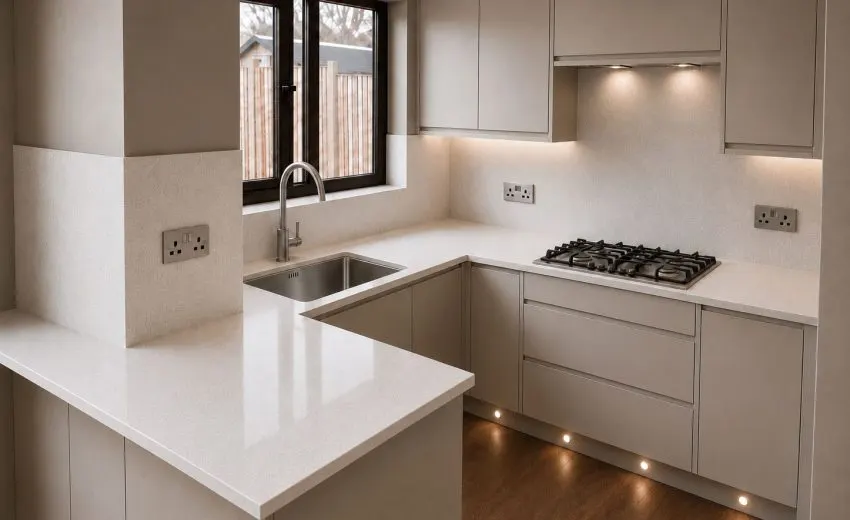
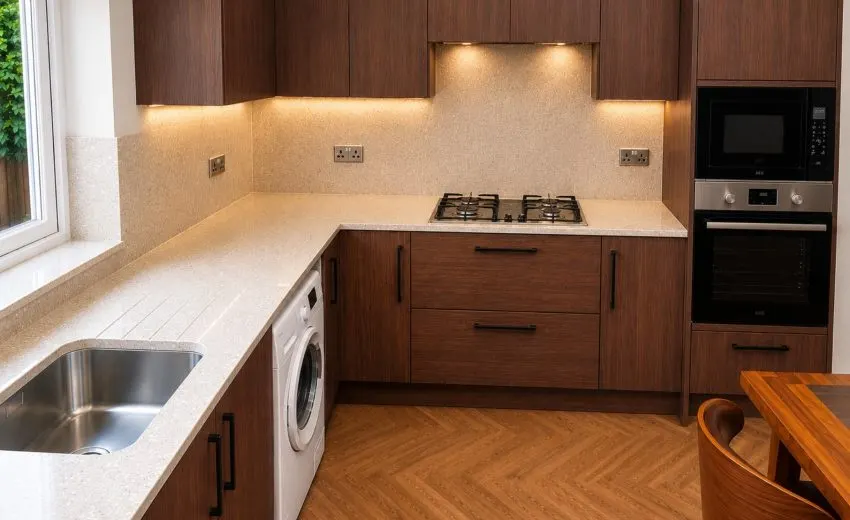
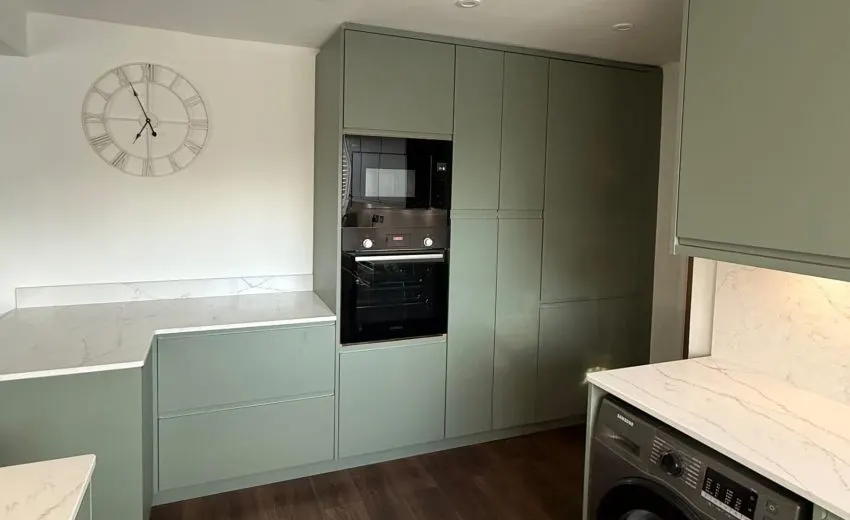
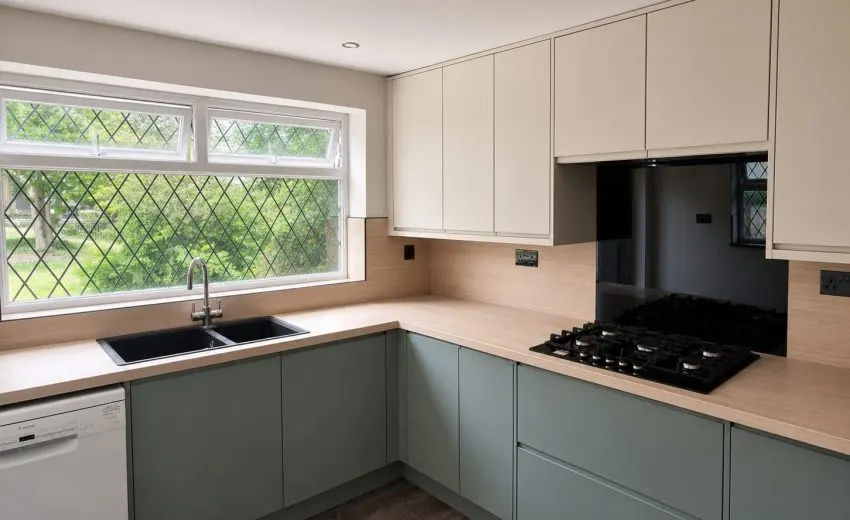
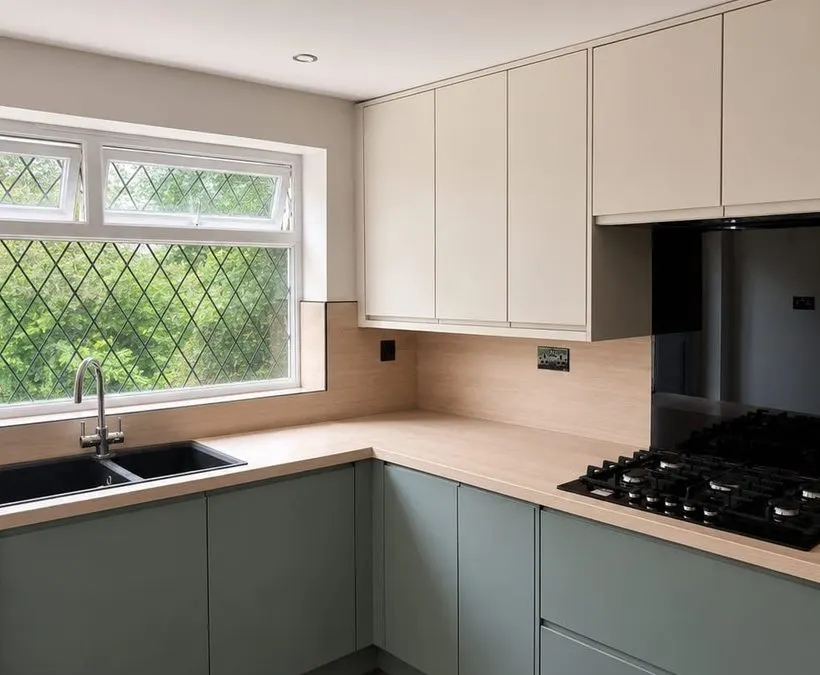
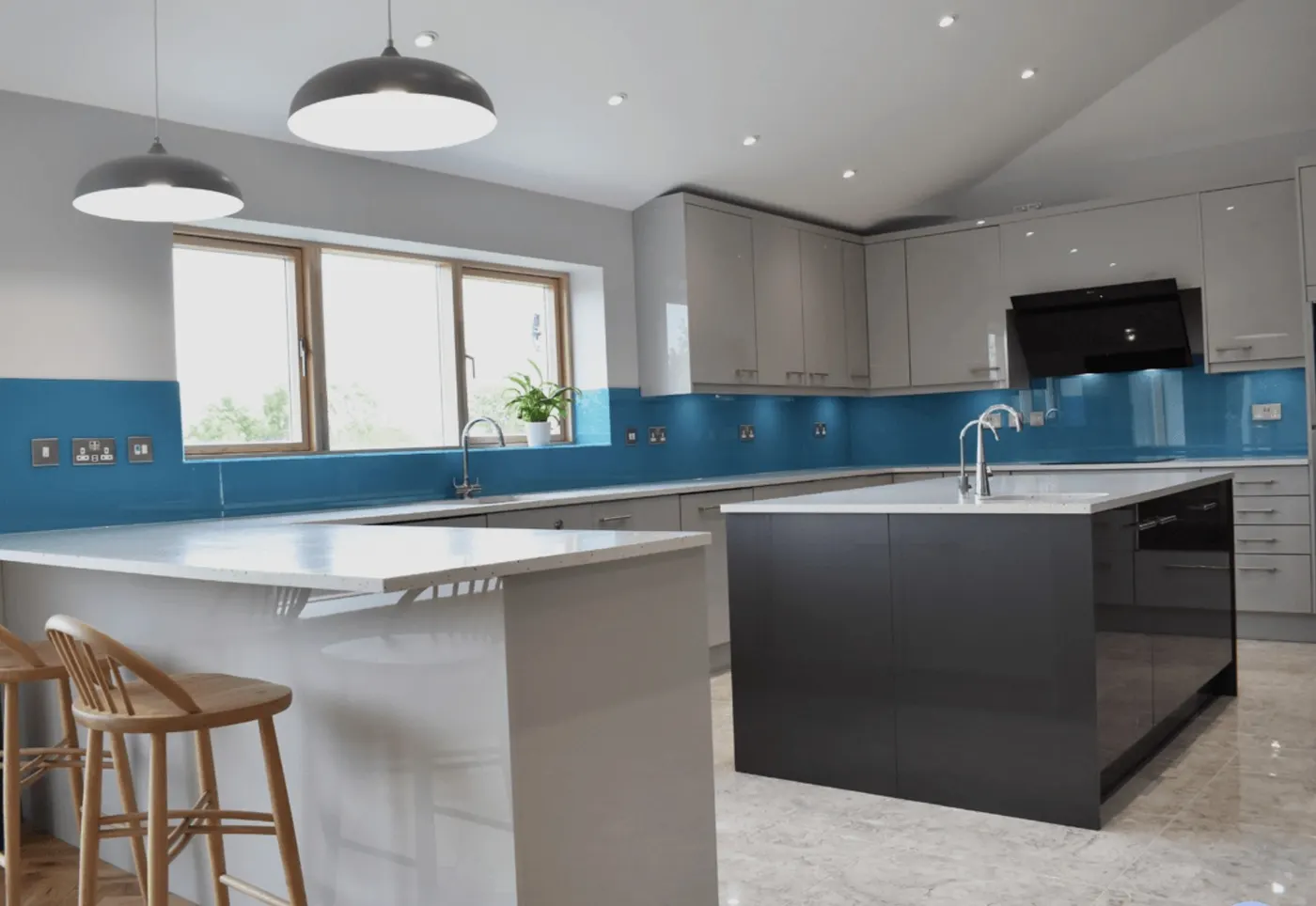
Our projects include white quartz with soft blue veining, white veined quartz with reed green doors and cream quartz with dark walnut, which show how versatile quartz can be.
Care and maintenance
Both surfaces are durable, but their care differs. Quartz needs very little beyond wiping and avoiding harsh chemicals and very hot pans. Granite may benefit from periodic sealing to help it resist stains, depending on the stone. For both, using chopping boards protects knives and the surface, and wiping spills promptly is good practice.
Always follow the care guidance for the specific product you choose.
Which should you choose?
Choose quartz if you want a consistent finish, light colours or veining, and the lowest maintenance. Choose granite if you love the individuality of natural stone and are happy with occasional sealing. For most busy family kitchens we work on, quartz is the more popular choice, but the right answer depends on your taste and how you use the room.
Cost and quotes
The cost of any stone worktop depends on the size of the kitchen, thickness, edges, cut-outs and the particular material. We quote for each kitchen after measuring. Our published guidance is that worktop replacements start from around £2,000, depending on your room, products and work. Barry can include stone worktops in a free design and quote.
See them before you decide
Stone surfaces are best chosen in person. Looking at samples against your doors and in your own light is the best way to decide. You can compare quartz at our showroom, or ask Barry to bring samples on a free home visit.
How each feels in everyday use
In a busy family kitchen, the difference often comes down to habits. If spills tend to sit for a while before anyone wipes them, a non-porous quartz surface is more forgiving. If you often take pans straight from the hob, granite may cope better with occasional heat, although trivets are still sensible for any stone. Both handle daily chopping, kneading and cleaning well when looked after.
Pale quartz shows crumbs more readily, which some people see as a benefit because it is easy to tell when it is clean. A busy speckled granite hides crumbs and marks, which suits households who prefer a surface that always looks tidy. Darker polished surfaces of either type can show fingerprints and water marks, so a matt or textured finish may suit some homes better.
Matching the stone to your kitchen style
Think about the rest of the room before choosing. Quartz in white or cream with a soft vein suits sage, reed and navy doors, and handleless kitchens where clean lines matter. Granite in deeper speckled tones can suit wood doors and traditional rooms with warm colours. If you want the worktop to be the main feature, a dramatic vein or a striking natural slab can carry the room, so keep the doors simpler.
Whichever you choose, plan the sink, hob and tap positions early, as the cut-outs are made to exact sizes during templating.
Frequently asked questions
Related services, projects and areas
Service: Kitchen Makeovers
Kitchen questions: Kitchen renovation questions answered
Areas we cover nearby: Walsall, Lichfield, Sutton Coldfield